
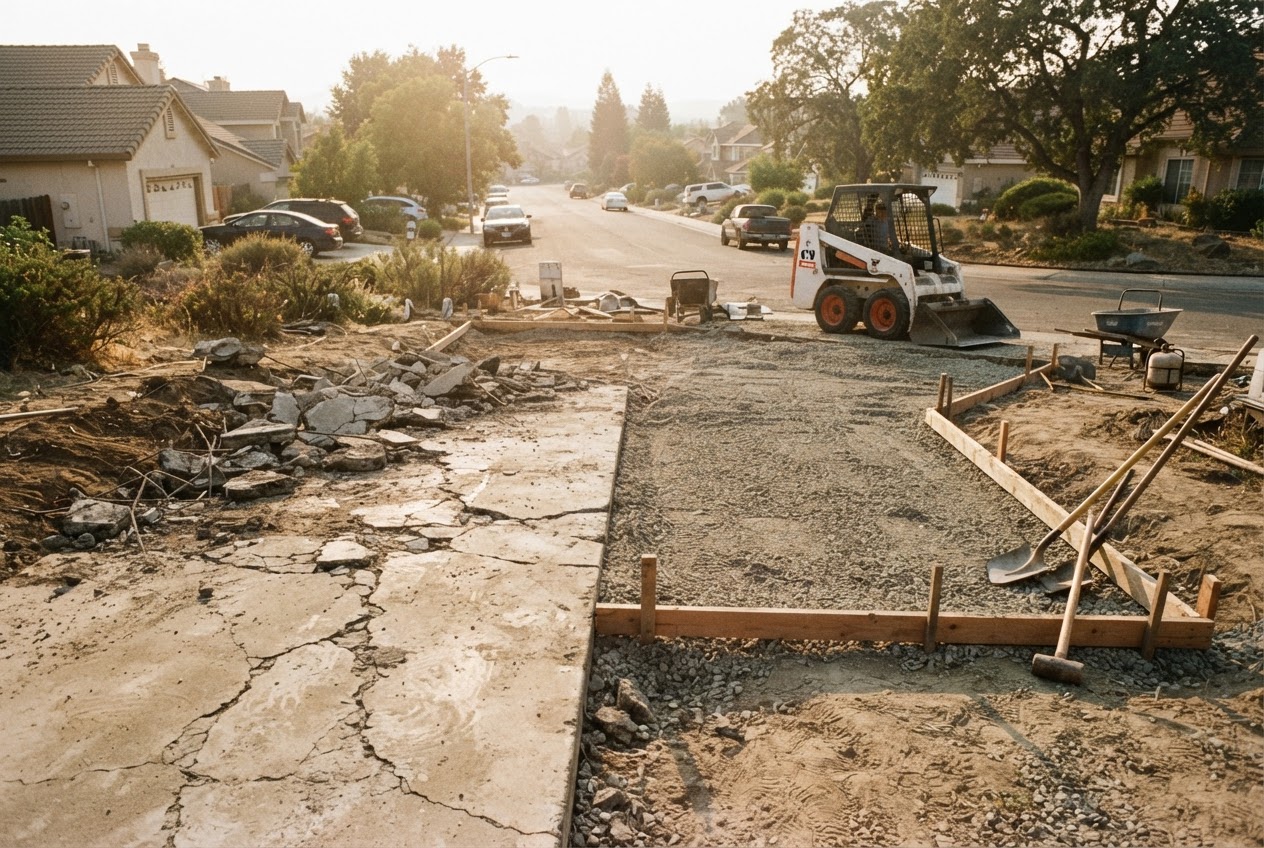
Your slab is telling you which repair it needs — you just have to know how to read the symptoms. Here are the six most common, sorted honestly. (For the full decision framework, see new concrete vs. resurfacing; this is the field guide version.)
Signs resurfacing will hold
Surface spalling and flaking. The top layer is shedding — from weathering, salts, or a finishing issue when it was poured — but the slab under it is solid. Tap test: sound concrete rings; delaminating concrete thuds. If the body of the slab is sound, an overlay bonds well and holds.
Stable hairline cracks. Fine cracks that have looked the same for a long while, with both sides at the same height. These are the normal life of concrete. A resurfacing system with crack treatment underneath handles them.
Cosmetic fatigue. Stains, faded color, an old finish you're tired of. The happiest resurfacing candidate there is.
Signs the problem is underneath
Offset cracks. Run your shoe across the crack: if one side is higher, the base is moving, and no overlay stops ground movement. The overlay cracks along the same line — usually quickly.
A settling panel or corner. Something under that section gave way: uncompacted fill, or water washing out the base. On much of Fresno's ground — loam over a cemented hardpan that keeps water from soaking away — the water explanation leads. The section needs to come out, the base needs to be fixed, and the cause of the water needs a name.
Ponding. Water standing on the slab means the surface doesn't fall where it should. Resurfacing follows the old surface faithfully — including the low spot. Fixing ponding means fixing the grade, which means replacement of at least the affected area, poured to a written slope plan.
The honest middle: partial replacement
Slabs rarely fail uniformly. Often two panels are structurally gone and the rest is sound — and then the right scope is surgical: replace the failed panels, treat and resurface the rest, and match the finish so it reads as one surface. This costs less than full replacement and more than pretending, which is the correct price. What moves it is on the pricing page.
What to do next
Walk your slab after the next rain and take photos of where water stands — that's the single most useful thing you can show anyone who bids the work. Then have the lot walked. Ours is free, and the diagnosis comes with the reasoning attached: resurfacing, tear-out & replacement. The comparison FAQ answers the follow-ups.