
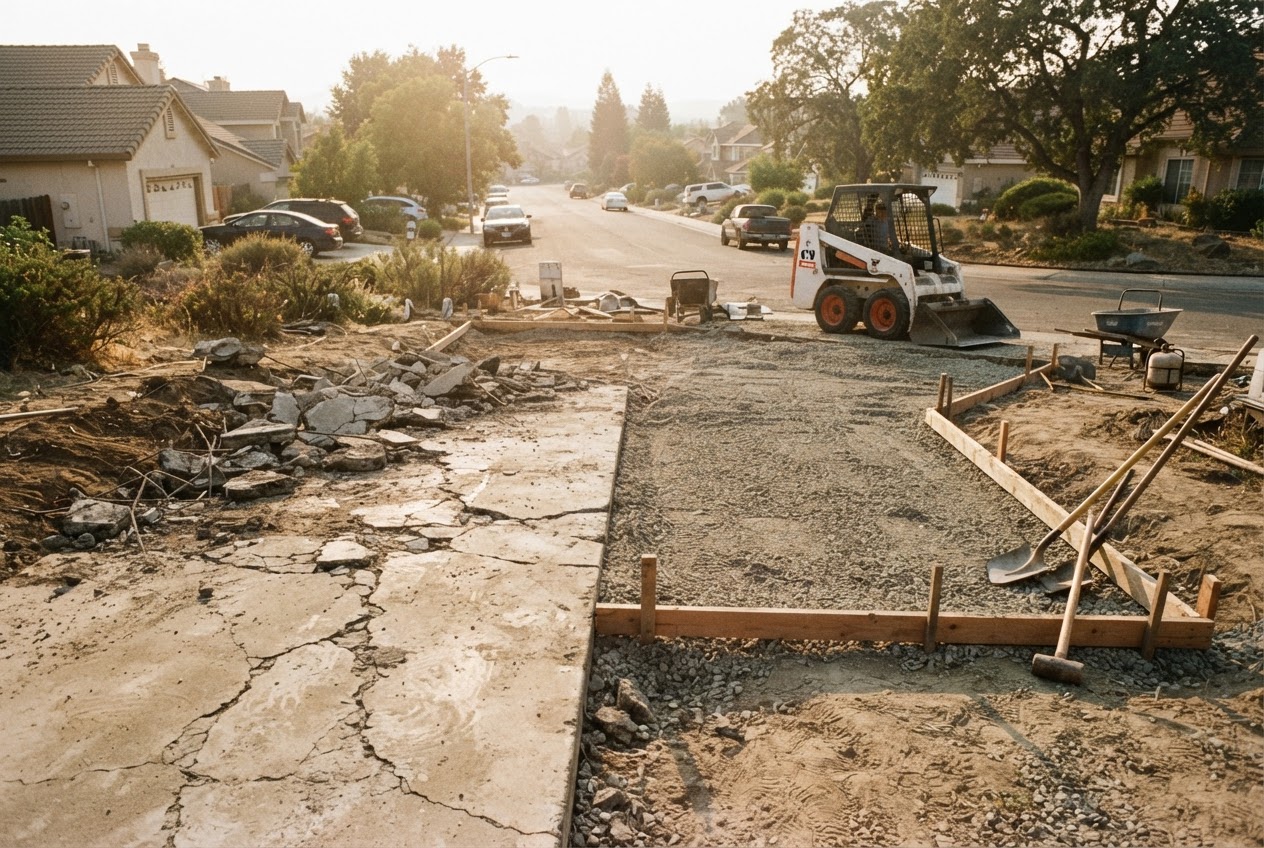
Resurfacing costs less than replacement, which makes it tempting to hear "yes, we can resurface that" from whoever bids lowest. Sometimes that's the right answer. Sometimes it's an expensive way to hide a problem for two winters. Here's how to tell which one you're looking at.
When resurfacing is genuinely right
Resurfacing means bonding a new wear surface over your existing slab. It works when the slab underneath is structurally sound:
- Surface spalling, flaking, or discoloration
- Hairline cracks that aren't growing or offset
- An outdated finish you want refreshed
- A sound slab that just looks tired
If that's your situation, resurfacing is the honest recommendation and we'll make it. It's a real part of our resurfacing service.
When resurfacing is painting over the problem
A resurfaced slab is only as good as the slab under it. These symptoms mean the problem is below the surface, and a new surface won't reach it:
- Offset cracks — one side higher than the other. The base is moving.
- Settling sections — a corner or panel sinking. Water or poor compaction under the slab.
- Ponding — water standing after rain. The surface doesn't have enough fall, and resurfacing follows the old surface, low spot included.
- Cracks that return — if it cracked through once from movement, the overlay inherits the movement.
In the Fresno area the underlying cause is usually water. Much of town sits on loam over a cemented hardpan that water can't pass through, so water that isn't carried off the surface works on the base instead. Covering that with an overlay treats the symptom while the cause keeps working underneath.
The honest decision rule
Ask what's causing what you see. Cosmetic cause → resurface. Movement or water cause → fix the ground and the slope, which usually means tear-out and replacement of the affected area. The tear-out and replacement page explains what that involves, and the pricing page covers why tear-out and grading are the two biggest cost drivers.
A contractor who quotes resurfacing without asking what's under the slab — or without watching where water goes on your lot — is quoting the job they want to do, not the job you need. The lot walk exists so you get the second one. More on that in the comparison questions in our FAQ, or if you're weighing materials entirely, concrete vs. pavers.