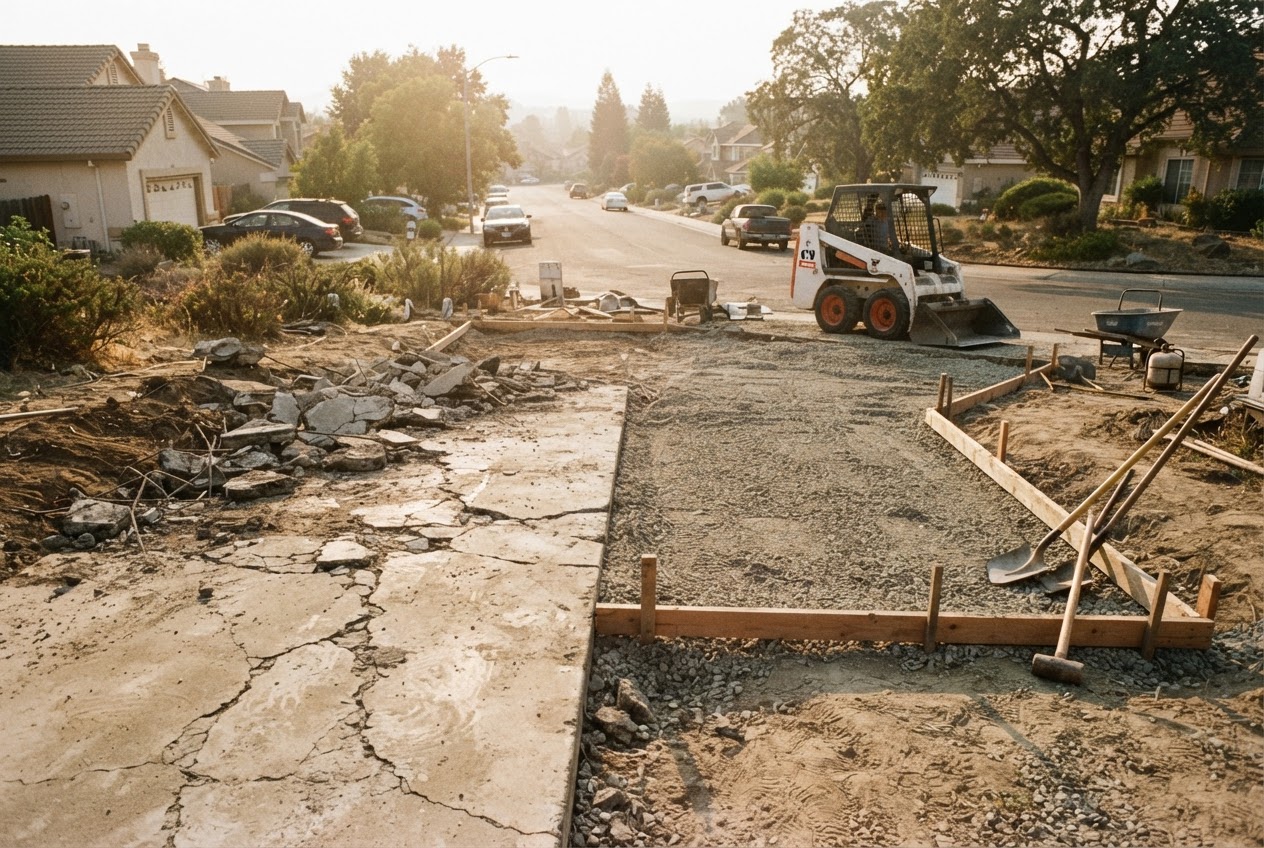
Old concrete slab torn out with the base graded and formed for replacement

Tear-out · Replacement

Concrete Tear-Out & Replacement in Fresno, CA

A cracked slab does not always need to be demolished. But when concrete is sinking, shifting or holding water, covering the surface may leave the real problem untouched. The first step is finding out what has failed and how much concrete actually needs to be replaced.

Communion Concrete evaluates damaged residential concrete and performs tear-out and replacement in Fresno, Clovis, Madera and surrounding communities. Work may involve a failed driveway panel, an uneven sidewalk section, a damaged patio or a larger area that needs a fresh pour. Our approach begins with the condition of the existing slab, the ground beneath it and the way water moves across the property.

Important service clarification: Communion Concrete does not offer concrete resurfacing as a standalone service. This page explains resurfacing as a possible alternative homeowners may encounter, but our work centers on concrete removal and replacement. If an overlay alone is the right choice, do not assume that it is a service we provide.

Request a free on-site estimate to discuss your damaged concrete and whether localized or larger replacement makes sense.

Warning signs

When damaged concrete needs more than a new surface

A hairline crack, flaking finish and a sunken slab do not mean the same thing. Cosmetic surface wear may be limited to the top layer. In contrast, offset joints, shifting panels and persistent puddles can point to movement, grade problems or trouble beneath the concrete.

Uneven concrete is a particularly important warning sign. It is the condition that most often leads our owner to recommend replacement instead of resurfacing. That is not a blanket rule that every irregular surface must be removed. It means the cause and extent of the unevenness deserve attention before choosing a repair.

Cracks that create a height difference

A fine, level crack can behave very differently from a crack with one side higher than the other. Where edges have shifted, an overlay may hide the change temporarily without stopping further movement. Damaged sections may need to be removed so the exposed base can be assessed.

Settling, sinking and low spots

A slab that drops at a corner or collects water after rain may have an underlying support or grading problem. Adding material on top can change the appearance, but it will not automatically restore the base or create a reliable place for runoff to go.

Root pressure and wet ground beneath concrete

We have encountered large tree roots and saturated subgrade after old driveways are removed. These are real examples of problems that may not be obvious from the surface. They do not explain every failed slab, but they show why demolition can reveal work that must be addressed before another pour.

Surface wear versus structural movement

Flaking, discoloration and shallow surface defects can sometimes be addressed without full replacement when the underlying concrete is sound. A moving or substantially uneven slab is different. The honest question is not simply which finish will make it look new, but whether the existing concrete can continue to perform its job.

The decision

Concrete resurfacing vs. replacement: what is the difference?

Homeowners often hear resurfacing, overlay, repair and replacement used as though they mean the same thing. They do not.

Surface only · not offered as a standalone service

Resurfacing generally involves placing a compatible new wear surface over existing concrete. Its success depends on the condition and preparation of the original slab and the suitability of the chosen product. It cannot be relied upon to correct major settlement, unstable support or poor drainage underneath.

What we do

Tear-out and replacement means removing failed concrete and installing new concrete after the exposed area has been evaluated and prepared. It creates an opportunity to address grade, base and layout problems that cannot be reached through a surface-only treatment.

Partial replacement focuses on the damaged section rather than automatically replacing every neighboring slab. Communion Concrete accepts partial driveway panel replacement and individual sidewalk panel replacement, as well as larger replacement jobs.

The best decision depends on where the problem originates. Communion Concrete does not sell standalone resurfacing, so this comparison is educational rather than a promise to install an overlay. For a deeper look, read new concrete vs. resurfacing.

Replacement options

Concrete removal and replacement options

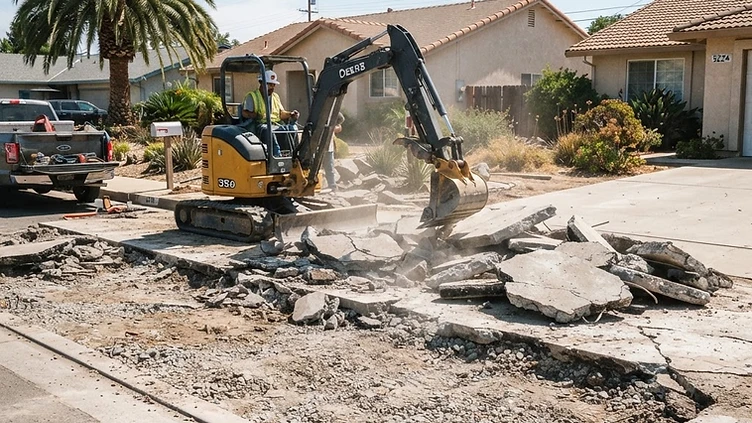
Old cracked driveway being broken up with the base gravel exposed
01

Partial driveway panel replacement

One failed part of a driveway does not necessarily mean the entire driveway must come out. When the remaining concrete is serviceable, replacing damaged panels can limit the area of demolition. The new section still needs appropriate alignment, support and water movement where it meets the existing driveway.

For homeowners considering a completely new driveway, see our concrete driveway contractors service for new pours, widening, extensions and larger replacements.

02

Damaged sidewalk sections

Lifted or uneven sidewalks can create an awkward or hazardous walking surface. Communion Concrete accepts both individual panel replacement and full sidewalk section replacement. The extent of work depends on the failed area and its connection to adjacent concrete. See walkways, sidewalks and RV pads.

03

Old patio and pool deck slabs

Communion Concrete replaces damaged patio and pool-deck slabs as well as building new ones. Near a house or pool, finished heights, transitions and drainage deserve particular attention. Pool-deck concrete work should not be confused with work inside the swimming pool, which we do not perform. See concrete patios and pool decks.

04

RV pad replacement

An existing RV pad may need removal before a new pad is installed. Communion Concrete handles both replacement of an existing pad and installation on cleared ground. A new RV pad needs to be planned around its expected vehicle use rather than treated like a simple walkway.

Below the slab

Why the ground and drainage matter during replacement

When an old slab comes out, the exposed area offers a chance to see conditions that were hidden under the concrete. The site may have roots, disturbed or saturated soil, uneven grades or other issues affecting the new work. Not every property has the same soils or drainage pattern, so a Fresno address alone is not a substitute for looking at the actual lot.

Our approach emphasizes reading the slope and deciding where runoff should travel before a new pour, with a written slope-and-drainage plan for every new pour. That planning matters when new concrete is placed next to a house, a driveway entrance, an existing walk or another paved surface.

A replacement should not simply recreate a low spot that already traps water. At the same time, no responsible contractor can promise that concrete will never crack, move or need maintenance. The purpose of assessment and preparation is to make informed choices about the conditions that can be addressed during the job.

The Ground-First Pour

How Communion Concrete approaches a replacement project

Our Ground-First Pour process matters most on replacement work, because conditions may become clearer after the old slab is removed.

  1. Step 1

    Walk the existing concrete and look for causes

    The process begins with an on-site walk with Jose. The assessment considers visible damage, uneven areas, surrounding grades and where water goes. The aim is to decide what should be removed rather than assume every visible crack requires complete demolition.

  2. Step 2

    Define the removal and new-pour scope

    The scope should distinguish damaged sections to be removed from sound concrete that may remain. It should also account for access, removal and haul-away, and any necessary preparation after the old surface is exposed. Demolition and haul-away are part of our replacement work.

  3. Step 3

    Plan the grade before pouring

    For new pours, Communion Concrete provides a written slope-and-drainage plan. That document should help explain the intended surface direction and how the replacement relates to adjoining concrete and the property.

  4. Step 4

    Remove, prepare and replace

    Once the old material is removed, conditions can be reassessed. Base preparation, forms, concrete placement and finishing follow the agreed scope, with a final walk-around before the job is considered complete.

  5. Step 5

    Review use and curing instructions

    New concrete needs appropriate curing time before traffic or heavy loads. The actual dates for using a replacement depend on the pour, weather, mix and intended loading. Follow the project-specific instructions rather than a universal date found online.

Cost

What affects concrete tear-out and replacement cost?

A replacement quote is not determined by square footage alone. Important factors include:

Amount and location of failed concrete

One accessible panel differs from a long driveway or backyard slab.

Demolition and removal

The thickness, condition and accessibility of the old concrete affect the work.

What is revealed beneath it

Roots, wet subgrade or unstable areas can change preparation needs.

Grading and drainage changes

Correcting low areas and adjusting the surface to shed water may be part of the scope.

Finish and connection to existing concrete

Matching elevation, joints and a visually compatible finish can take additional planning.

Access and scheduling

Equipment access, the property's layout and available working days affect project logistics.

Communion Concrete offers free on-site estimates. New projects are often booked roughly 2–4 days ahead, but that is an availability range, not a fixed start-date promise for every replacement job. Specific scheduling is confirmed when the estimate is prepared. See our pricing page for the main cost drivers.

FAQ

Frequently asked questions about resurfacing and replacement

Service area

Why choose Communion Concrete for damaged concrete?

The value of this service is the decision-making before the new concrete goes down. We have seen root-related issues and saturated soil beneath removed driveways. Our approach puts the lot, the slope and the scope in front of the pour, with a written drainage plan for new concrete work.

We also offer the flexibility to replace individual driveway or sidewalk panels instead of presenting total replacement as the only option.

Communion Concrete serves Fresno, Clovis, Madera and nearby communities from its Fresno service-area base. Project availability and service reach can be confirmed when you request an estimate.

Get a clear plan for failed concrete in Fresno

If your driveway, sidewalk, patio or concrete pad is sinking, uneven, cracked or trapping water, Communion Concrete can review the damaged area and explain a possible tear-out and replacement scope. New pours are planned around the property's drainage, with a written slope-and-drainage plan.

(559) 206-3347 · communionconcrete@outlook.com · By appointment, Friday–Sunday