
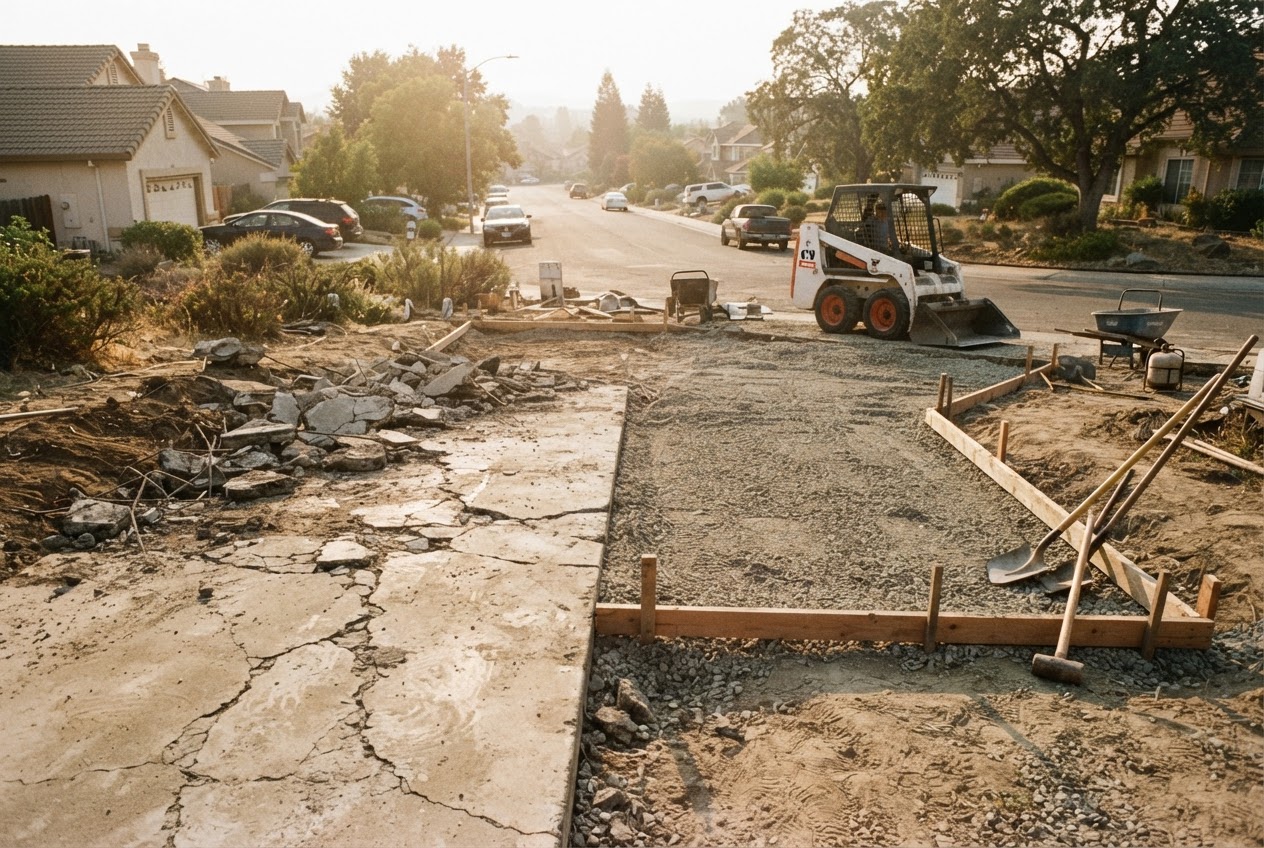
Tear-out is the loud part of concrete work, and knowing what's coming makes it a much easier few days. Here's the sequence as you'll actually experience it, window by window.
Before anything breaks
The written scope is already done by this point — the lot has been walked, the slope-and-drainage plan is on paper, and you know which days are work days. We work Friday through Sunday, so your job is scheduled in those blocks and you've had the plan in hand before the first machine arrives. Your part before demo day: cars out, sprinklers off near the work area, and anything fragile moved back from the slab edge. The scope lists it all; no surprises is the point. (The full sequence from first call to final walk-around is on the process page.)
Day one: breaking and hauling
The old slab gets broken into liftable pieces — this is the jackhammer-and-machine day, and it's the loudest the project gets. Reinforced slabs take longer than plain ones because the steel holds the pieces together. Broken concrete gets loaded and hauled off. By the end of this phase you're looking at bare ground, and this is where the job quietly becomes a different job than a cheap bid planned for.
The step that matters most: the base
With the slab gone, the ground tells the truth. Soft spots, old wash-outs, roots, the low grade that made the old slab pond — it's all visible now, and this is the only moment it can be fixed at reasonable cost. The ground gets cut or filled to the planned grade, the fall from the slope plan gets shaped into the earth itself, and everything gets compacted. On much of Fresno's ground, where a cemented hardpan keeps water from draining downward, this regrade is the drainage system. It's also why tear-out jobs are priced after a lot walk: nobody honest knows the base condition until the slab is gone, but reading the lot narrows the guess enormously.
Forming, pour, and finish
Forms go up to the planned lines and heights — the slope plan made physical — and get checked against the written fall before the truck is ordered. Pour day itself is the fast day: concrete placed, screeded, floated, joints cut, finish applied. After the loud days, it's almost anticlimactic.
Cure and walk-around
Foot traffic after a day or two, vehicles after about a week, full strength in about a month — the dates for your specific pour come at the final walk-around, which we do together before the job is called done. First storm after that, take a look: the water should do exactly what the written plan said. That's the test the whole job was built to pass.
Wondering whether your slab even needs tear-out? Start with new concrete vs. resurfacing. Service details are on the resurfacing & replacement page, and the timeline FAQ covers scheduling.