
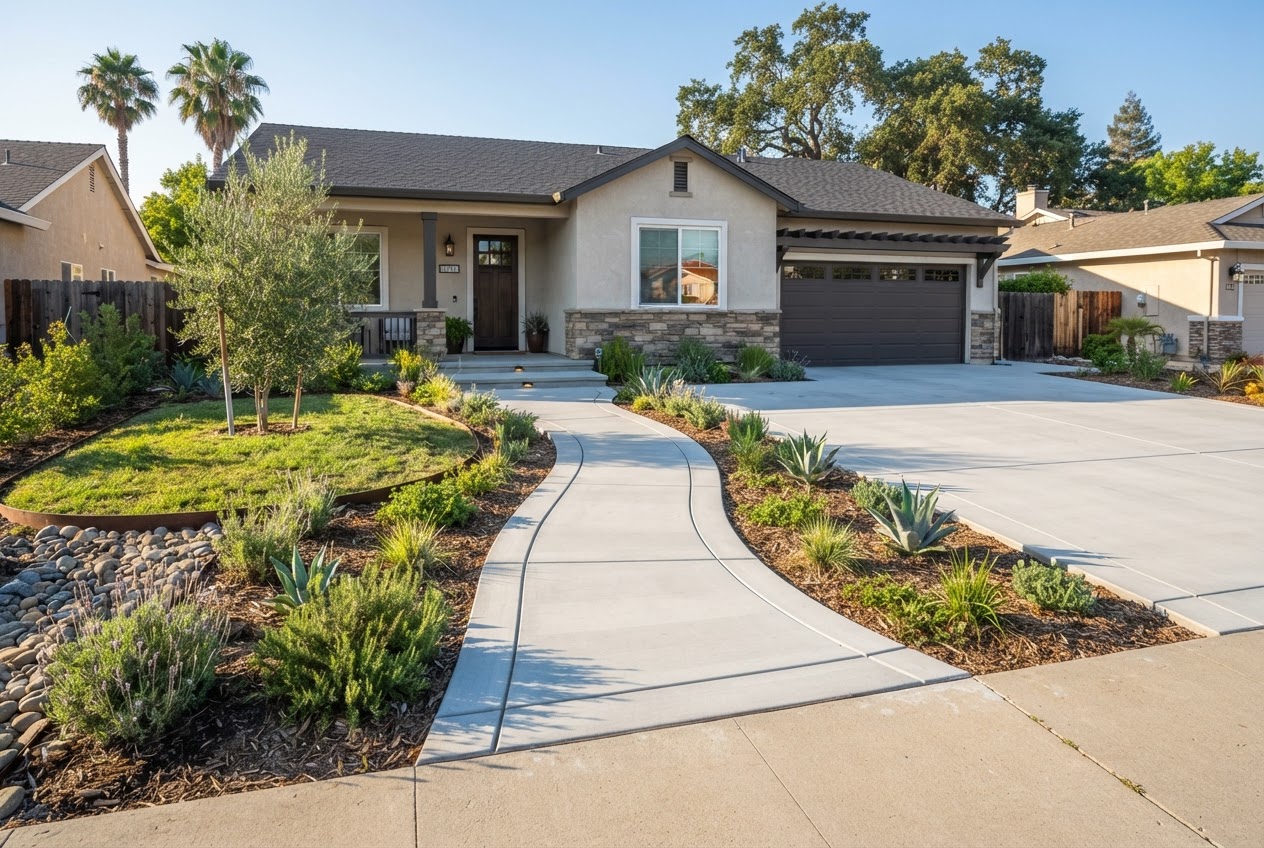
Sidewalk replacement is usually triggered by one of two things: a panel lifted into a trip hazard, or a stretch cracked past the point of pretending. Either way, here's the honest sequence, so nothing about the job surprises you.
First, why it failed — because the cause is still there
Sidewalk panels don't lift for no reason. The two usual suspects:
Tree roots. The most common cause of lifted panels in established Fresno neighborhoods — the mature trees that make streets like those in Old Fig Garden beautiful also run roots directly under sidewalks. Replacing the panel without addressing the root replays the failure. The honest options get discussed at the lot walk: rerouting the path slightly, root barriers, or accepting a shorter service life to keep a tree everyone loves. There are worse tradeoffs than a good tree.
Water under the slab. Settled or washed-out panels mean water has been moving under the sidewalk — often from a downspout, a broken sprinkler line, or yard grading that funnels flow along the walk. On Fresno's hardpan ground, water that can't soak downward travels sideways, and a sidewalk base is an easy path. The replacement scope should name the water source and the fix, or the new panels inherit the problem.
The work, in order
- Demo and haul-away. The failed panels are cut free from sound neighbors, broken out, and hauled off.
- Base correction. The exposed base gets regraded and compacted — this is where root and water issues actually get fixed.
- Forming and tie-in. New work has to meet old work at exactly the right height on both ends. A lip at a tie-in is a brand-new trip hazard, which would be a poor outcome for a trip-hazard job.
- Pour and finish. Broom finish is standard for sidewalks — traction is the point. Joints get placed to match the existing pattern so the repair reads as intentional.
- Cure. Foot traffic after a day or two. We give you the dates at the walk-around.
What it costs — the drivers
Small jobs carry proportionally more setup per square foot, so per-panel pricing isn't linear; demo, haul-away, root work, and tie-in care are the variables. The full driver list is on the pricing page, and the estimate is free and on-site because the cause of the failure — root or water — can only be priced by looking at it.
Details of the service live on the walkways & sidewalks page, timeline questions in the FAQ, and if the failed stretch has you rethinking materials entirely, here's the honest concrete vs. pavers comparison.